CULTURAL MAP BRIEF
- Ronan Devlin Studio
Overview:
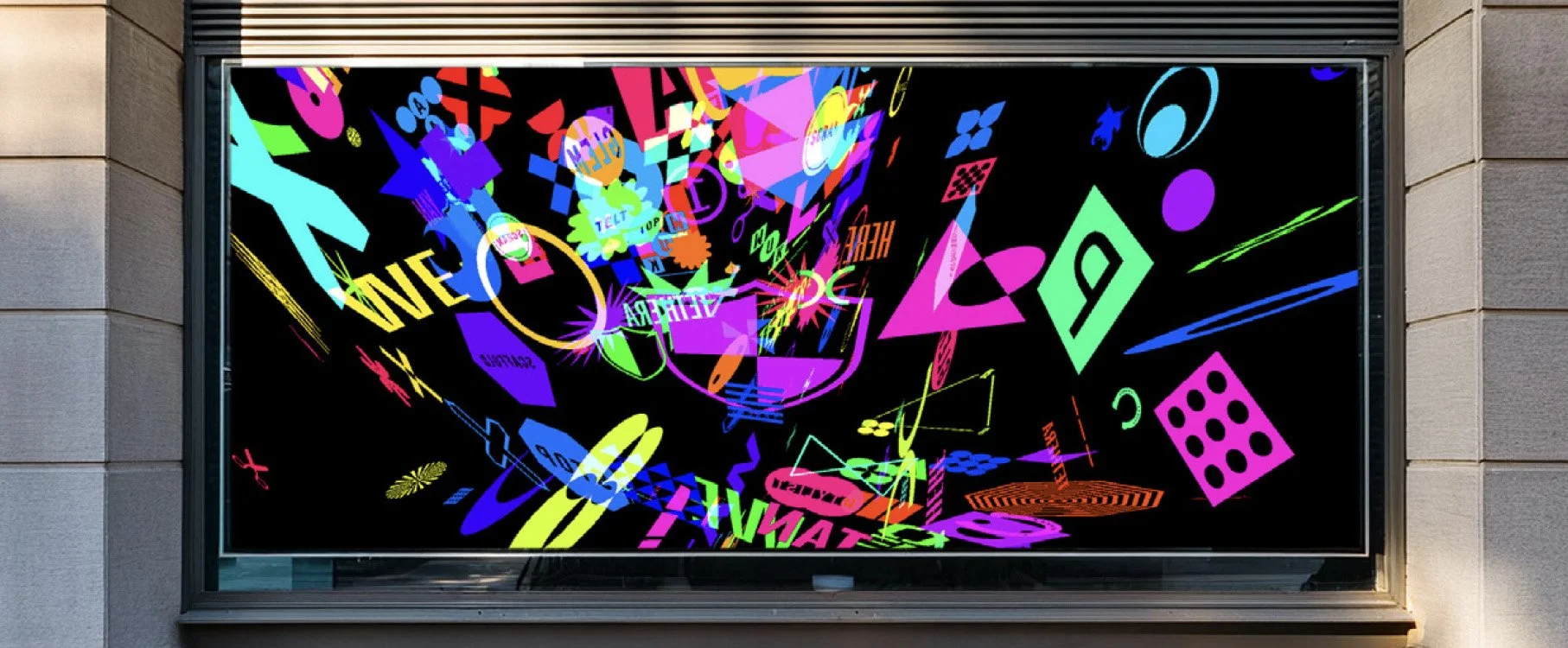
This brief invites you to create a personal or cultural map of an environment that holds significance for you. This could be your city, street, home, outer space, or even an internal landscape of thoughts and memories. The goal is to develop a unique visual language, in your chosen medium, that captures your perception, observation (and definition) of a place.
As well as being a route towards creating a piece of art or design, this process (in the long term) can serve as a research tool for tackling any creative project or problem and help you explore how visual elements (icons, symbols, images and other graphic devices) can communicate complex cultural and personal narratives.
https://www.ronandevlin.studio/
Stage 1: Information Gathering (Research Phase)
In this stage, you will collect visual, material, and conceptual resources to form the foundation of your map.
Here are some suggestions (feel free to select one, several or your own way gathering):
Walk through the place: Explore your chosen environment, paying attention to details, structures, sounds, and textures that resonate with you.
Record images: Capture your surroundings through photography, illustration, or drawing. Document both large landscapes and small, intimate details.
Find and collect objects: Gather a selection of organic, man-made, and discarded materials. Look for textures, shapes, and items that represent or speak to the place.
Collect words: Pay attention to words or phrases you overhear in the environment, whether spoken, written, or found in signage. Consider street names, slogans, or informal conversations.
Carry out online research: Search for articles, images, and maps that relate to your chosen place. Look for historical, cultural, or artistic references that deepen your understanding.
Explore your imagination: Reflect on a remote, idealised, or even impossible place.
Stage 2: Mapmaking (Creative Phase)
Transform your findings into a cartographic journey through your place. Consider the following:
Develop icons, symbols, and signs: Using the materials you’ve gathered, create a set of visual representations (icons, symbols, and signs) that describe key aspects of your place. These elements should be personal, abstract, or stylized.
Image montage/photo-essay: Compile a visual narrative or create a photo-essay that reflects the atmosphere, details, and characteristics of your place. This could combine photography, illustration, and found materials.
Visual poetry map: Develop a map that tells a poetic story through images and text. It can explore the rhythm of your place or take a more abstract approach using language as part of your visual journey.
Collaborative comparison: Compare your map with your peers and explore how others have interpreted similar or different places. Consider collaboration to merge ideas or to create a collective map (merge disciplines?).
Stage 3: Application (Final Design Phase)
Apply your map to a creative project covering one of these areas:
2D design/artwork: Transform your map into a print, painting, drawing, collage, zine, or book. Think about how it translates into a physical, wearable, or shareable form.
3D design/artwork: Create a set of physical signs or a sculpture that represents your map. How can it engage with or function in your environment?
Moving image: Use your map as the basis for an animated film, interactive software, or website (for screen or projection). This could be an immersive, animated journey through the place.
Textile design: Translate your map into a textile-based piece, such as fabric design or garments.
Visual identity creation: Use the materials and concepts you’ve developed to create a visual identity for your place. Think about logos, branding, and how your map could evolve into a public or commercial identity.
Submission portal for final work will be set up in Canvas assignments later in the module
INSPERATION / VISUAL REFERENCES
Concrete Poetry (Movement):
https://en.wikipedia.org/wiki/Concrete_poetry
https://monoskop.org/File:Williams_Emmett_ed_Anthology_of_Concrete_Poetry.pdf
Brian Eno (Artist & Musician)
https://en.wikipedia.org/wiki/Brian_Eno
Stephen Gill (Photographer)
https://www.stephengill.co.uk/portfolio/portfolio/nggallery/album/talking-to-ants/thumbnails
Alan Kitching (Designer/Ilustrator)
https://www.alankitching.com/portfolio
Richard Long (Environmental Artist)
https://hepworthwakefield.org/artist/richard-long/
https://www.theguardian.com/arts/gallery/2007/jun/28/art
Karel Martens (Artist & Designer)
https://www.itsnicethat.com/features/karel-martens-re-printed-matter-graphic-design-020920
https://martens-martens.com/
Paula Scher (Designer)
https://www.pentagram.com/news/paula-scher-maps
https://www.pentagram.com/work/the-public-theater
Semiotics & Mapping
https://en.wikipedia.org/wiki/Semiotics
https://www.edwardtufte.com/book/the-visual-display-of-quantitative-information/
https://informationisbeautiful.net/
https://www.visualcomplexity.com/vc/
The Situationists (movement)
https://medium.com/@jaeneenk/the-situationists-a79c7ac455ca
https://www.re-thinkingthefuture.com/city-and-architecture/a11332-the-situationists-and-mapping-the-city/#google_vignette
Hieroglyphs
https://www.britishmuseum.org/exhibitions/hieroglyphs-unlocking-ancient-egypt
https://en.wikipedia.org/wiki/Egyptian_hieroglyphs
Tomato (Art & Design Group)
https://www.itsnicethat.com/features/tomato-richard-turley-guest-edit-graphic-design-150822
https://tomato.co.uk/